Early detection of Alzheimer’s disease is critical to slowing disease progression and providing patients the opportunity to access treatments and implement lifestyle interventions. Mild cognitive impairment (MCI), a condition often preceding Alzheimer’s, is marked by memory difficulties that can forecast the development of dementia. However, conventional diagnostic tools such as PET scans or cerebrospinal fluid analysis are invasive, costly, and not widely accessible. A new study introduces a fast, noninvasive approach called the Fastball EEG test, which could help identify memory impairments in as little as three minutes.
Fastball EEG: How It Works
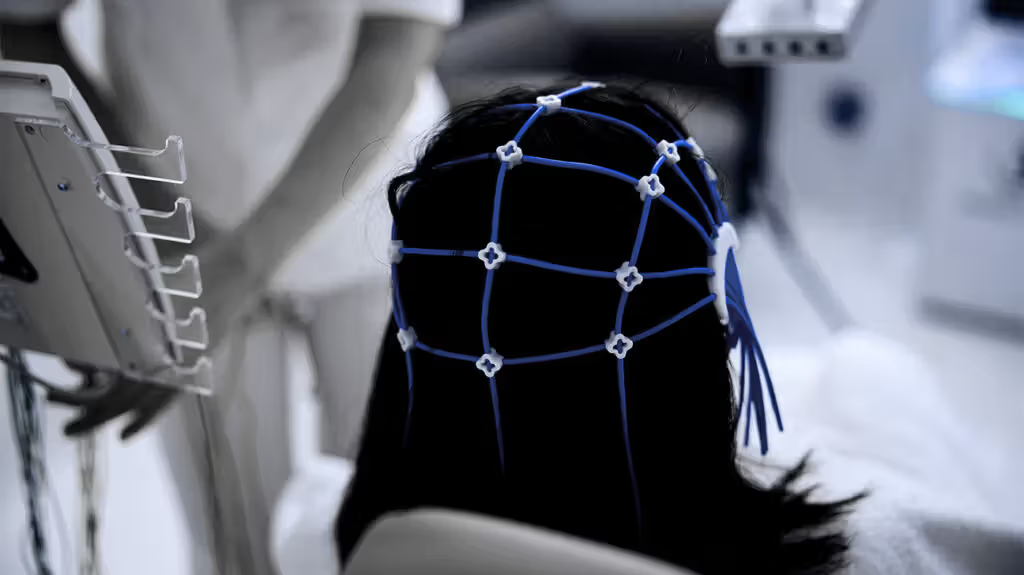
The Fastball EEG is a passive, noninvasive assessment that monitors electrical activity in the brain while participants view sequences of images on a screen. This test measures the brain’s automatic recognition responses, capturing how effectively memory processes are functioning. Participants do not need to perform any tasks beyond watching the images, making the assessment less influenced by anxiety, education, language, or cultural factors—common confounds in traditional cognitive tests.
During the study, researchers recruited 53 older adults diagnosed with MCI and 54 healthy older adults as controls. Each participant completed the three-minute Fastball test alongside standard neuropsychological assessments measuring memory, attention, and general cognition. Analysis revealed that individuals with MCI who displayed memory difficulties also had lower Fastball scores, suggesting that the test can reliably detect early cognitive impairments that may precede Alzheimer’s disease.
Benefits of Noninvasive Testing at Home
One of the key advantages of Fastball EEG is its adaptability for use outside clinical settings, including at home. Travel to hospitals or clinics can be stressful, potentially affecting cognitive performance and the accuracy of traditional memory tests. By conducting Fastball assessments in a comfortable, familiar environment, researchers aim to reduce anxiety-related confounds and obtain a more accurate picture of cognitive function. Home-based testing could also increase accessibility for individuals who face mobility challenges or live in remote areas.
Large-scale validation studies are underway, involving over 2,000 participants across multiple sites. These studies, expected to conclude in 2027, aim to establish the sensitivity and specificity of Fastball EEG for detecting early memory impairment and assessing its prognostic value in predicting Alzheimer’s progression.
Potential for Early Intervention
Early identification of memory decline offers multiple benefits. Patients diagnosed at an initial stage of Alzheimer’s or MCI can begin lifestyle modifications shown to slow cognitive deterioration, such as improved diet, physical activity, cognitive exercises, and social engagement. Moreover, early detection allows timely access to disease-modifying therapies, which are most effective when administered before significant neuronal loss occurs. Additionally, improved early diagnosis enhances the selection and stratification of participants for clinical trials, ultimately accelerating the development of new treatments.
Fastball EEG provides an objective and equitable method to evaluate recognition memory, bypassing subjective factors that can affect traditional tests. Its potential to function alongside biomarkers, such as blood-based or imaging indicators, could further improve diagnostic accuracy and reliability. By combining Fastball EEG with structural or functional biomarkers, clinicians may be able to identify Alzheimer’s-related changes earlier than ever before.
Cautions and Considerations
Despite the promise of Fastball EEG, some experts caution that reliance on electrical brain signals alone may not provide a complete diagnostic picture. Abnormal parietal lobe potentials, like the p300 signal used in this study, can vary between individuals and may not always correlate directly with Alzheimer’s pathology. Integrating Fastball EEG with broader EEG analysis or other biomarkers will be essential to reduce the risk of false positives and ensure reliable clinical application.
Long-term studies are also needed to confirm whether Fastball scores can predict cognitive decline over several years and guide clinical decision-making regarding treatment or monitoring intervals. Diverse and larger population studies will help validate its effectiveness across different demographics, further strengthening its utility as a standard assessment tool.
Looking Forward
The development of Fastball EEG reflects a growing trend toward noninvasive, rapid, and accessible diagnostic technologies for neurodegenerative diseases. If validated in larger clinical trials, this three-minute test could complement existing diagnostic methods, offering patients a convenient and stress-free option for early detection of Alzheimer’s disease. By identifying memory impairments sooner, patients and caregivers can implement preventive strategies, explore treatment options, and plan for the future with greater confidence.
As research progresses, integrating Fastball EEG into routine cognitive health assessments may resemble the role of ECGs in cardiac care—a quick, informative tool that flags early warning signs before more severe symptoms emerge. While longer follow-up studies are necessary, Fastball EEG represents a promising step forward in early Alzheimer’s diagnosis, with the potential to improve outcomes for millions at risk worldwide.